The last thing we expected to be doing two weeks after crossing the Nullarbor was to be crossing it again, but here we are on our continuing road trip with a new destination of Melbourne. Perth was great. We spent many days in culinary Fremantle and ambling around the busy Perth city centre and parks. There were two things that made us decide to leave Perth. The first was the caravan park we were staying in. More of a trailer park than a caravan park; it was the only place in Perth that we could afford. It was filthy – mucky spider-web filled toilets and showers, cigarette butts all over the camping ground. It was right under the flight path for Perth airport and beside a busy motorway, so there was constant engine noise. Added to that was the noise at night of the long-term residents (we were the only backpackers) playing their TVs and music at insane volumes and banging drunkenly on each other’s caravans demanding that people turn their TVs and music down. The other reason we had to leave Perth was the expense – or the temptation to spend. A pint cost $10. We can’t be having that, now, can we? So after a week enjoying the city and meeting up with friends, we set out for another week exploring the south-west coast of Western Australia. This proved to be a brilliant idea.
First stop was Bunbury where we treated ourselves to a day-long winery and brewery tour. We chatted with the locals who were also on the tour through the day, and had what can only be described as the craic. In the last winery we were debating whether or not we could afford an expensive bottle of Cabernet Sauvignon that we really liked – and decided we couldn’t. Just as we were getting off the bus at the end of the day, a local couple we had been friendly with presented us with that very same bottle as a parting gift. “Now you can enjoy the bottle you really wanted,” they said. I’ll say it again – Australians are great people.
We trundled on to Yallingup, where we met up with another friend, and then Margret River –the tourist destination for vacationing Western Australians. With the local map in hand we noticed we would pass by ten independent breweries and so made a pledge to have a drink (just a small drink) in each one. Our favourite of them all was the Bush Shack Brewery – which is as described, really. There’s nothing around you except dry bush and you’re sitting there with delicious cold dark ale, the sun beating down onto the sandy ground and kangaroos moving on the horizon. Also they had a round pool table. We’d go there again.
The scenery changed as we drove into forest territory and the town of Pemberton – home of the second tallest trees in the world. The caravan park was in the forest, and the trees were filled with a multitude of noisy birds that made a very big deal about the sun coming up in the morning. Green parrots came down looking for food. They’d sit on your shoulder and squawk and make you feel a bit like a pirate.
We have complained before about the biting mosquitoes and annoying flies in South Australia. All travelling backpackers that we met shared the same gripes. Nobody, however, warned us about the giant biting flies of south WA. These blighters, three times the size of a normal house fly, hover around menacingly and land on your ankles when you least expect it – say when you’re carrying a pot of boiling water for tea – and bite the crap out of you.
The best parts of the forest surrounding Pemberton were the Gloucester and Bicentennial Karri trees – two really really tall trees that can be climbed via spiralling metal rods that go the whole way to the top. They appear dauntingly high from the ground – the larger of the two rises 75 meters – but the view of the forest canopy from the top after 15 minutes or so of climbing is lush and beautiful.
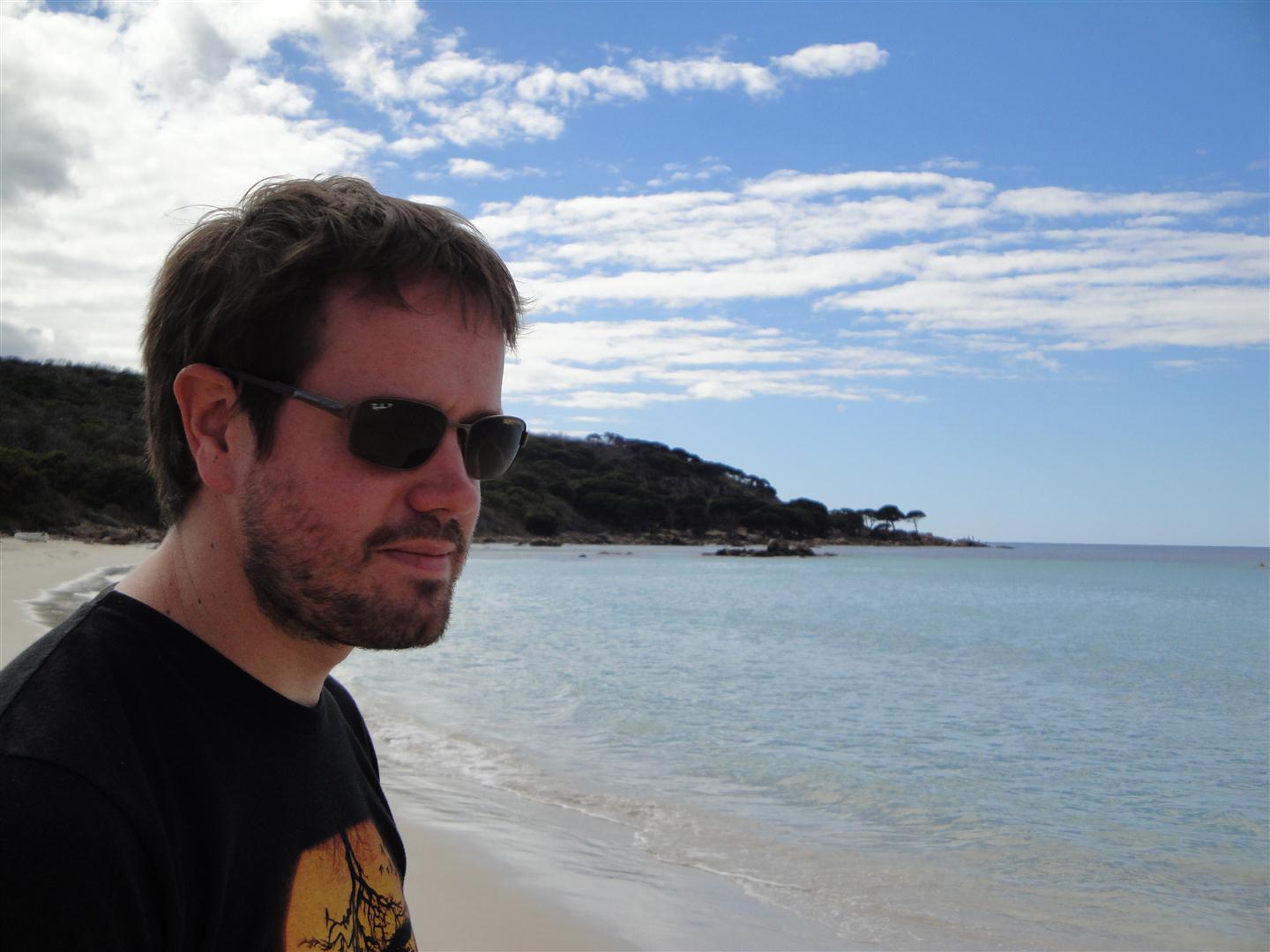
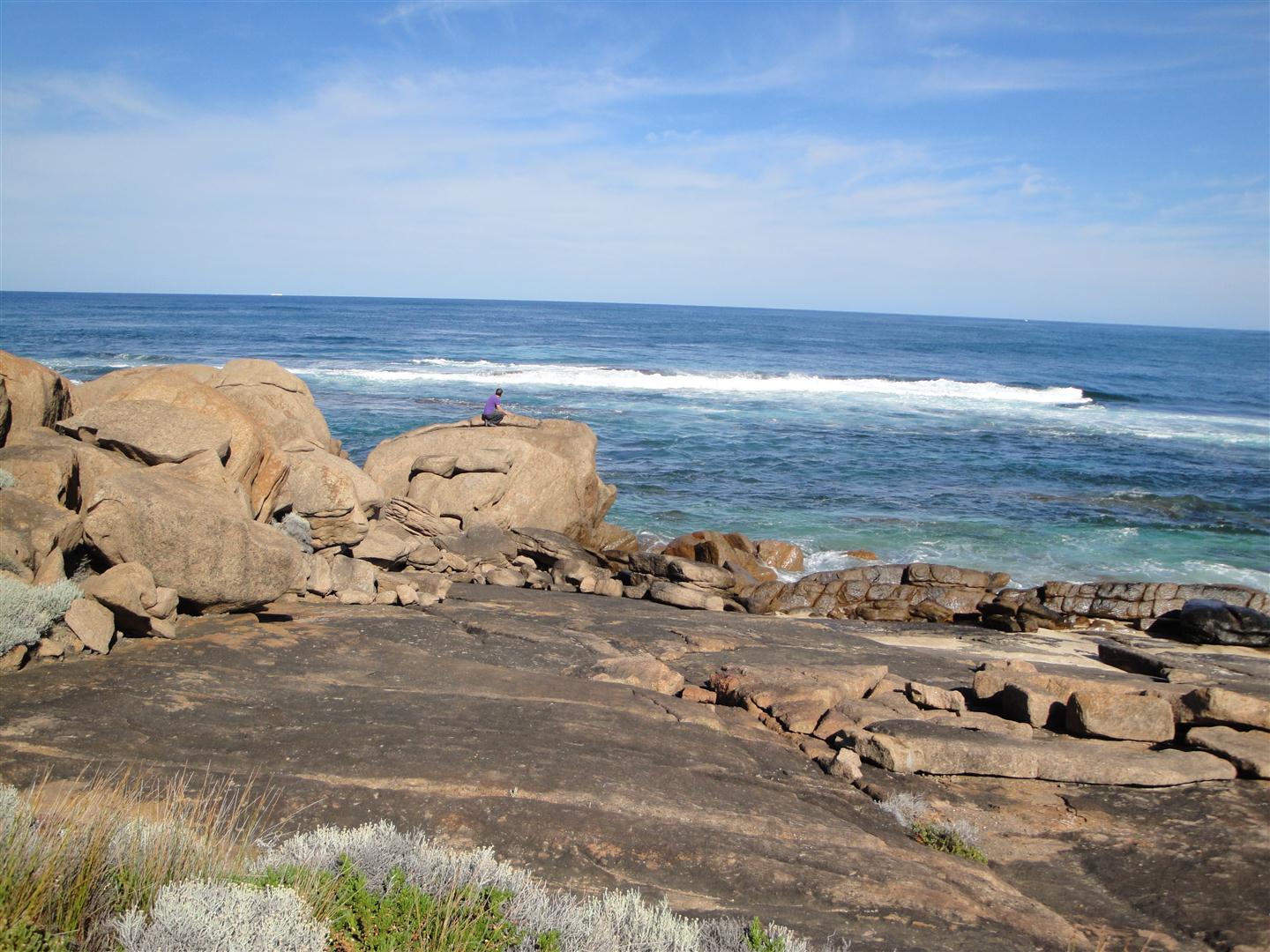
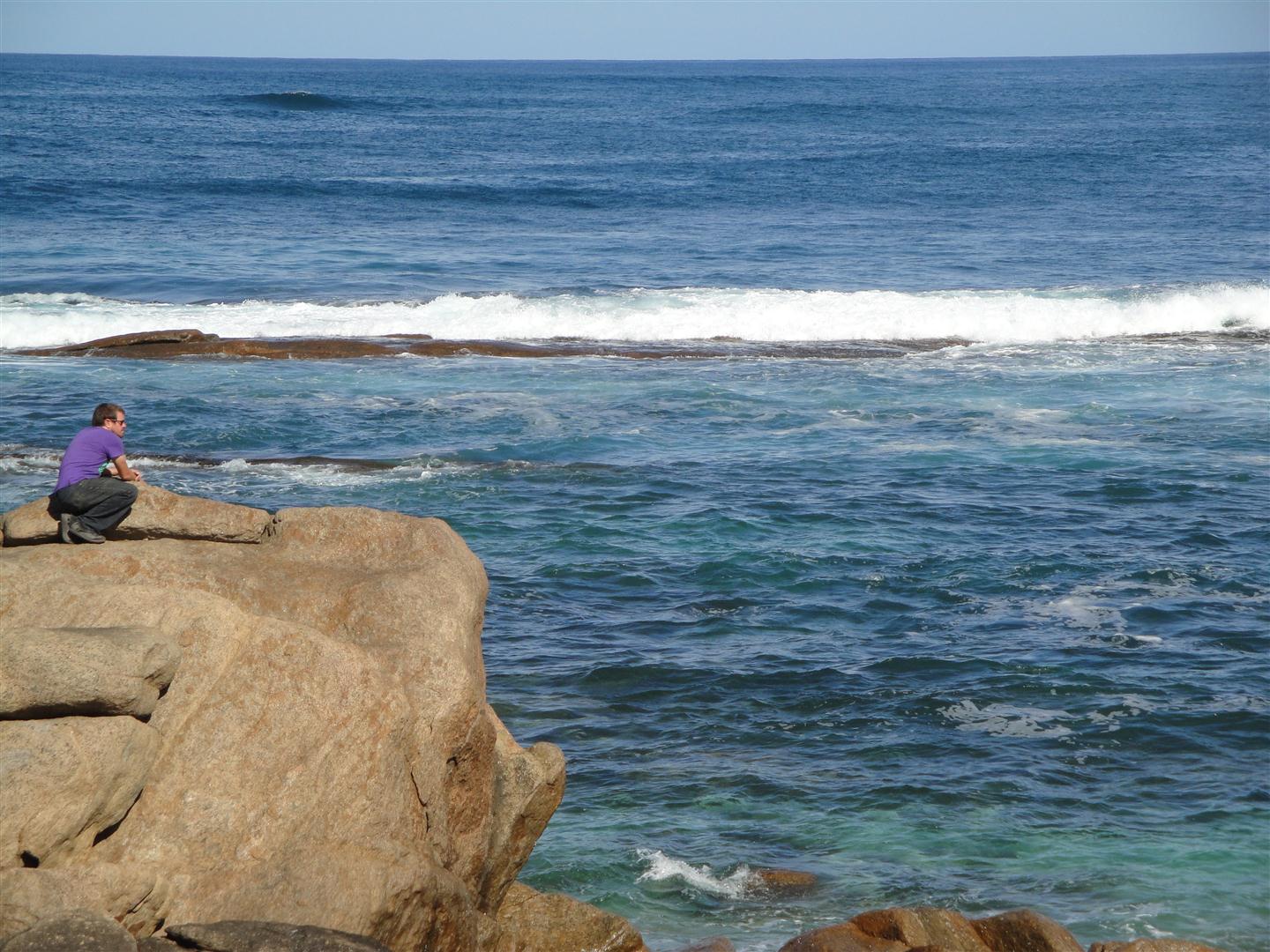
We passed through Walpole on the way to Albany and did the famous tree-top walk in the valley of the giants, which was great but not as much fun as the (much taller) climbing trees. Over this part of the trip we were left wondering why every single tourist information centre in Australia sold hand crafts and chutney. Later we stopped, almost by chance, at Green Pool Beach – the first of what would become many beautiful beaches along the south coast of WA. I think this one is still our favourite, though. It is a large shallow pool held still by huge granite rocks against which the distant waves would crash violently. Half of the beach was white sand and the other half was flat rock. The water was so clear it looked like glass.
Our last stop was Esperance on the Archipelago of The Recherche. This tongue-twister town sits overlooking aqua-blue sea in which sit 100 small islands. Apart from stunning beaches the towns second claim to fame is that in 1979 the American space craft Skylab crashed in the desert nearby. The local government charged NASA $400 for littering. NASA paid in full.
On the second night we camped in Cape Le Grand National Park. This was our favourite part of the trip. The camp site sits beside another shimmering beach with paper-white sand and a lapping pale-blue sea. There were small kangaroos hopping around everywhere. As we opened the tent in the morning there was a baby roo standing two feet away, looking curiously in at us.
The best part of the National Park, though, was climbing Frenchman Peak. This is a hill of solid granite that reaches 260 meters into the sky. Two hundred million years ago the sea level reached the top of the hill and carved into it a massive sea-cave with an opening at both ends. Now that the ocean has receded, the cave sits atop the hill and you can see the sun straight through it like something from the Lord of the Rings. The Aboriginals call it “The Eagle’s Eye”. The climb to the top is fairly difficult, but boy was it worth it. We climbed into the cave in the late afternoon, just as the sun was shining through the eye onto the plains below. The view stops you in your tracks and fixes your stare. You have to just sit down and look. The photographs (see below) do it no justice at all. Exiting the cave we climbed higher still and eventually reached the peak. So you’re sitting there on top of 260 meters of solid rock looking out as the green plains of the national park stretch to the horizon on one side. On the other side, you can see dozens of green islands dotted across the translucent blue sea and more peaks like the one you’re sitting on stretching into the sky. The experience was, literally, awesome.
So here we are now, sights seen, at Norseman again on the western side of the Nullarbor. We have to progress 2700km to Melbourne where we need to find four weeks of work in order to be able to travel on to Sydney, Hong Kong and Dublin (yay) in May. Since Berri we have driven over 5,000km – fingers crossed that our 21-year-old Ford Falcon with its expertly fitted replacement engine holds out second time around.
EDIT: Literally twenty minutes after I wrote this entry in transit, our car dramatically failed to start at the Norseman petrol station. We panicked and the garage owner called the local mechanic to come out. An hour of waiting and nail-biting fuelled by iced coffees followed and the mechanic arrived. He turned the key and the car started immediately. “Yeah it’s these old cars you see,” he said with greasy hair and a gleaming set of pristine white teeth “the electrics are slow. You have to turn the key this far and then wait and turn it the whole way.” Feeling foolish, we asked him whether the car was okay for driving across the Nullarbor. “Ah, yeah, sure it is” he said confidently. We drove on to Fraser Range from where we conclude this blog entry. We hope he’s right.






 eightyfish